Zent | Mobile App Design
Zent | Mobile App Design
UXathon 2025 -
Reimagining digital banking to build Gen Z’s trust
My Role
UX/UI Design, UX Research
Tools
Figma
Service Provided
Service Design, Mobile Design
Duration
1 Day
My Role
UX/UI Design,
UX Research
Service Provided
Service Design,
Mobile Design
Tools
Figma
Duration
1 Day
Overview
As part of a one-day hackathon hosted by UBC’s UX Hub, our team of four tackled the challenge of rebuilding Gen Z’s trust in digital banking.
We designed Zent, a mobile banking app feature for CIBC that transforms financial education into an engaging, gamified experience, helping young users feel confident, informed, and empowered in managing their money.
I contributed as the UX/UI Designer and Researcher, leading user research synthesis, ideation, and interface design in Figma.
The Challenge
How might we reimagine digital banking services to make big banks feel approachable and transparent in their efforts to support Gen Z's financial goals and build lasting trust and loyalty?
The Solution
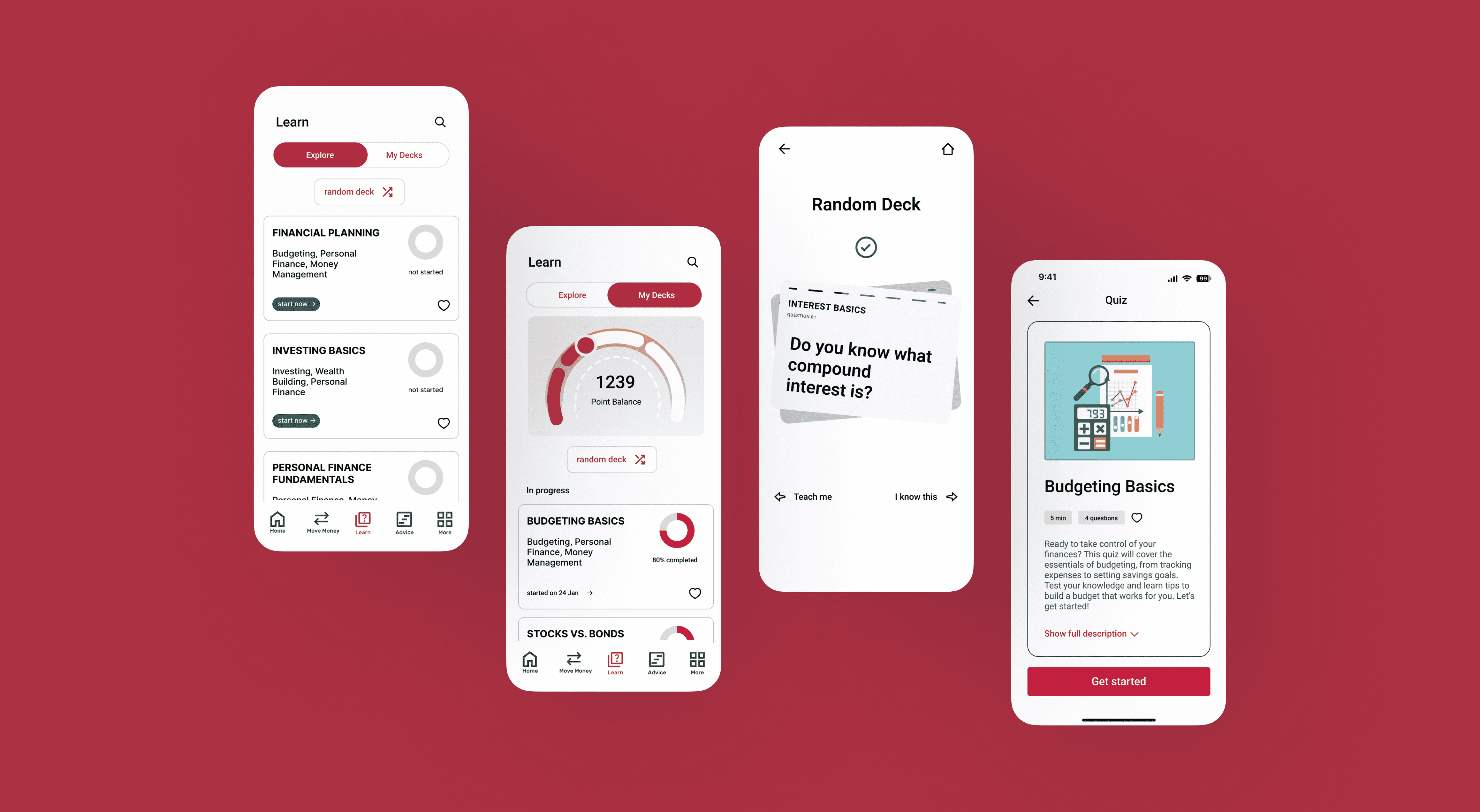
Zent is a mobile banking feature that reimagines financial education for Gen Z by making banking engaging and easy to understand.
Pain Point
Traditional financial education often feels overwhelming and text-heavy, which discourages Gen Z users from engaging with it.
Solution
Swipeable flashcards deliver information in a fast, familiar, and low-pressure format that aligns with Gen-Z's preference for quick, bite-sized content. Taking inspiration from social media platforms.
Pain Point
Users often don’t realize what they don’t know until they’re in real-life financial situations.
Solution
Short quizzes help users check their understanding and identify knowledge gaps early, encouraging more active learning and confidence building.
Pain Point
Financial literacy tools often lack personalization, motivation, or follow-up, making it easy for users to disengage or forget what they’ve learned.
Solution
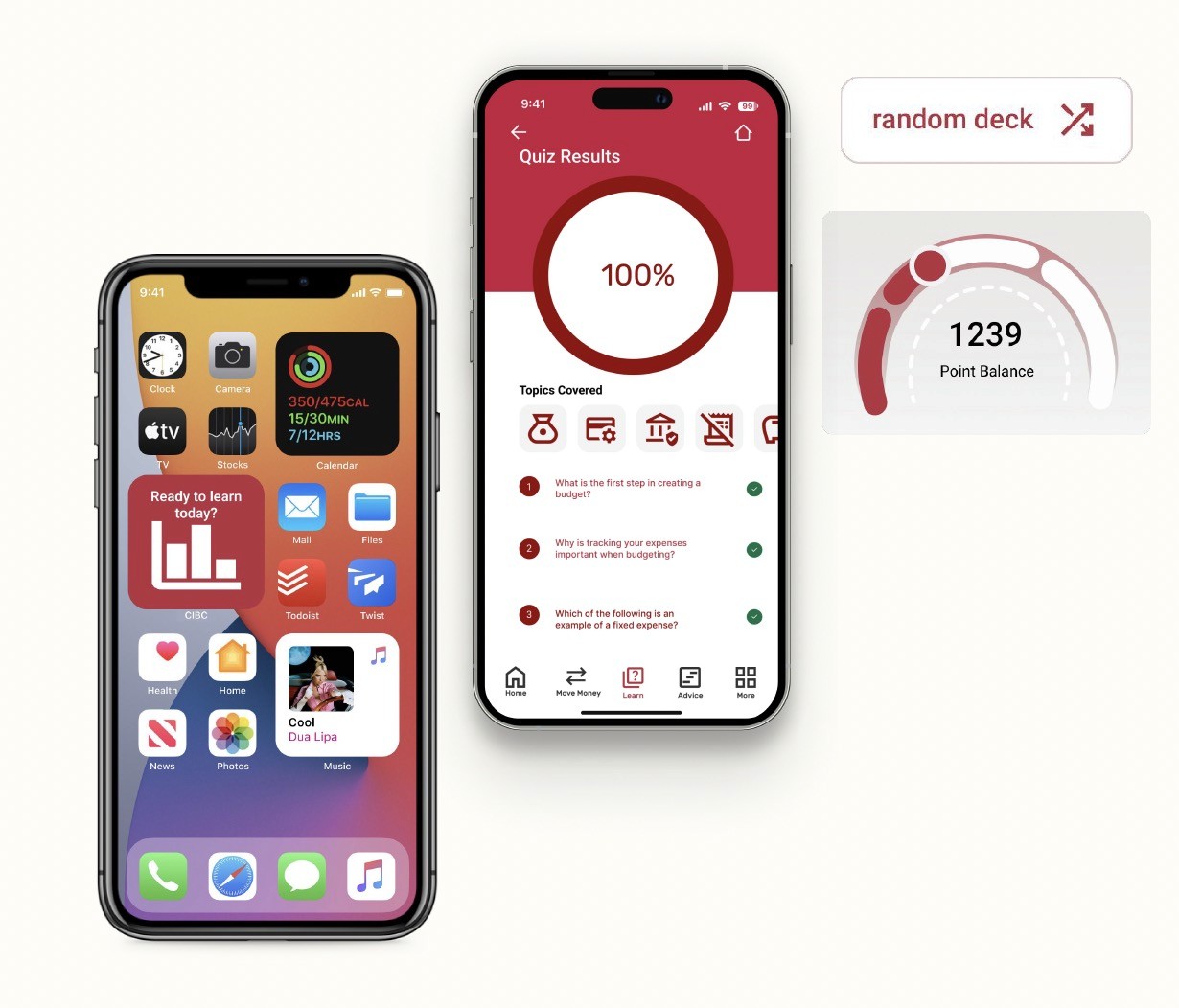
A combination of randomized content, gamified rewards, recap features, and widgets keeps users engaged over time, reinforces learning, and encourages consistent interaction, helping turn financial learning into a sustainable habit.
Research
Understanding What Builds Trust
What does Gen Z value in banking?
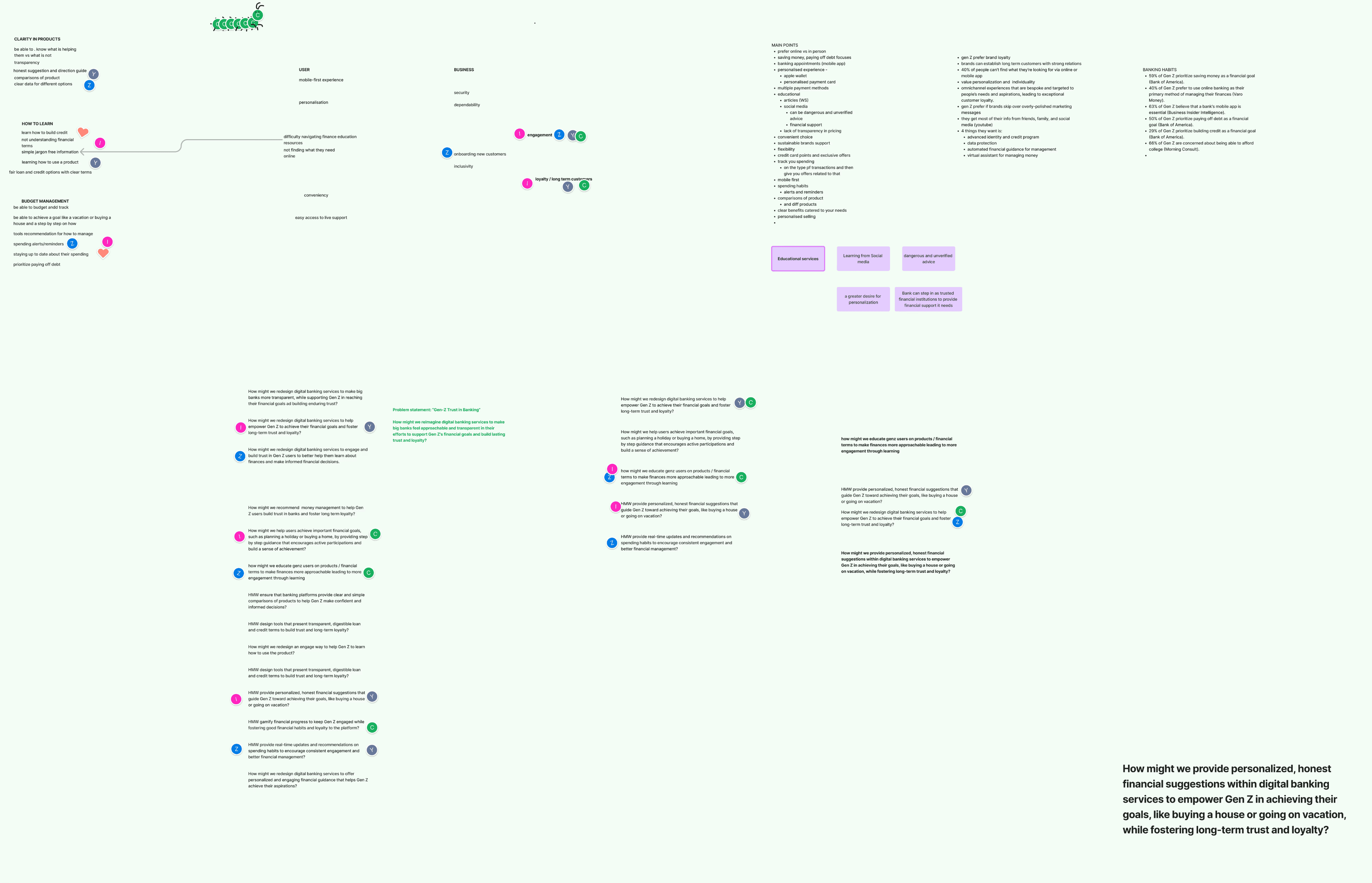
Through secondary research and informal interviews with peers, we uncovered key trust factors:
Transparency and clear benefits
Privacy and security
Personalized experiences
Easy navigation and dashboards
Goal tracking and insights
Insights
Why focus on education?
01
Empowerment
Educated customers make better decisions and feel in control.
02
Transparency
Teaching users about fees and rates builds confidence and reduces doubts.
03
Relationships
When banks act as learning partners, users feel supported rather than judged.
Our team realized that trust doesn’t just come from secure interfaces, it’s built when users understand their finances. We identified three pillars of financial trust:
New Problem Space
How might we reimagine financial education to make banking approachable and transparent, building trust and engagement with Gen Z?
Ideation
Turning Education Into Play
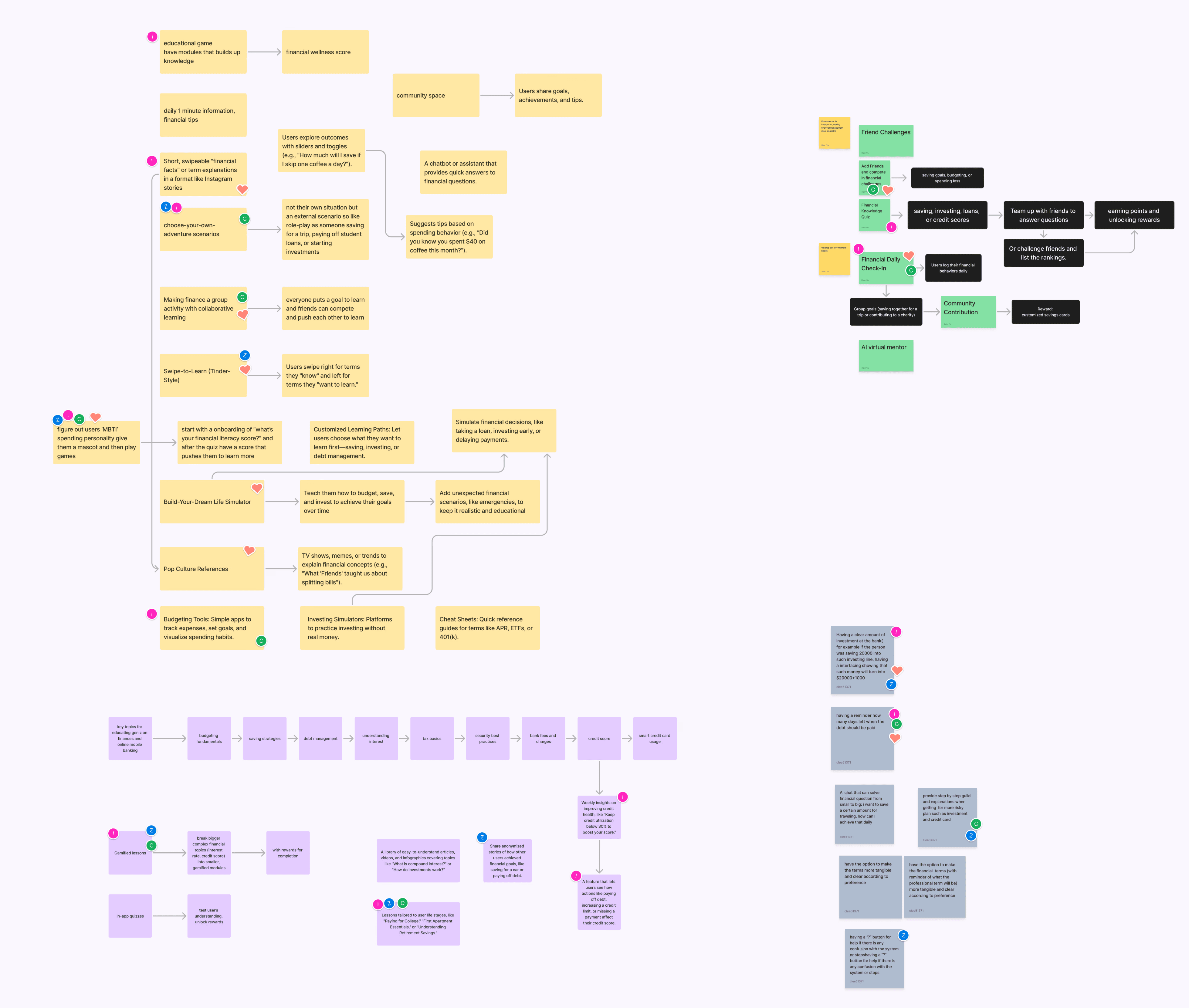
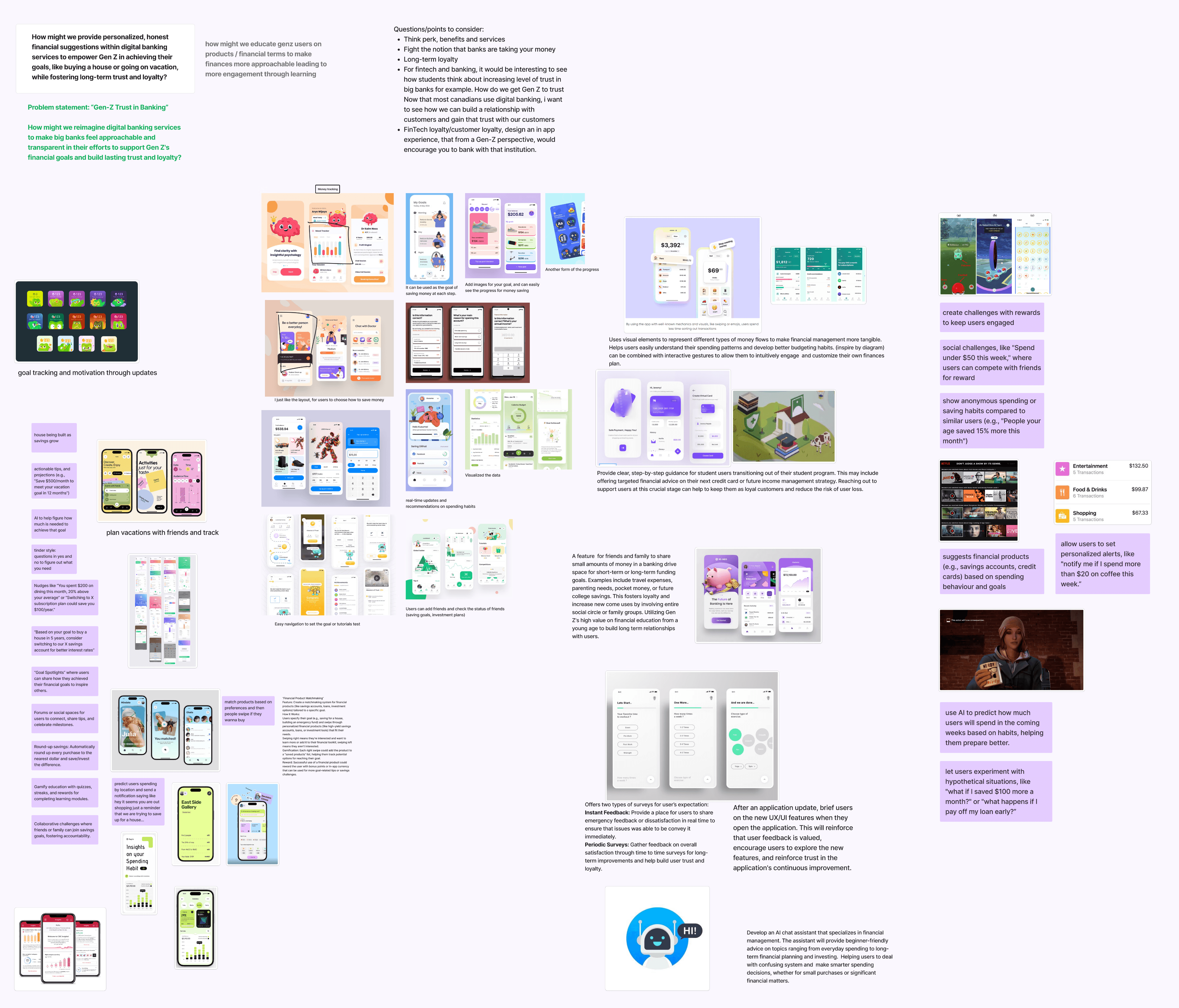
During our brainstorming phase, we explored ways to blend financial literacy with microlearning and gamification, concepts already familiar to Gen Z.
Key User Flow
Simplifying the Path to Learning
We mapped a core flow focused on the Learn page, where users explore cards, quiz themselves, and view progress analytics. Each action reinforces understanding and builds confidence.

UI Kit
Blending with CIBC’s Visual Language
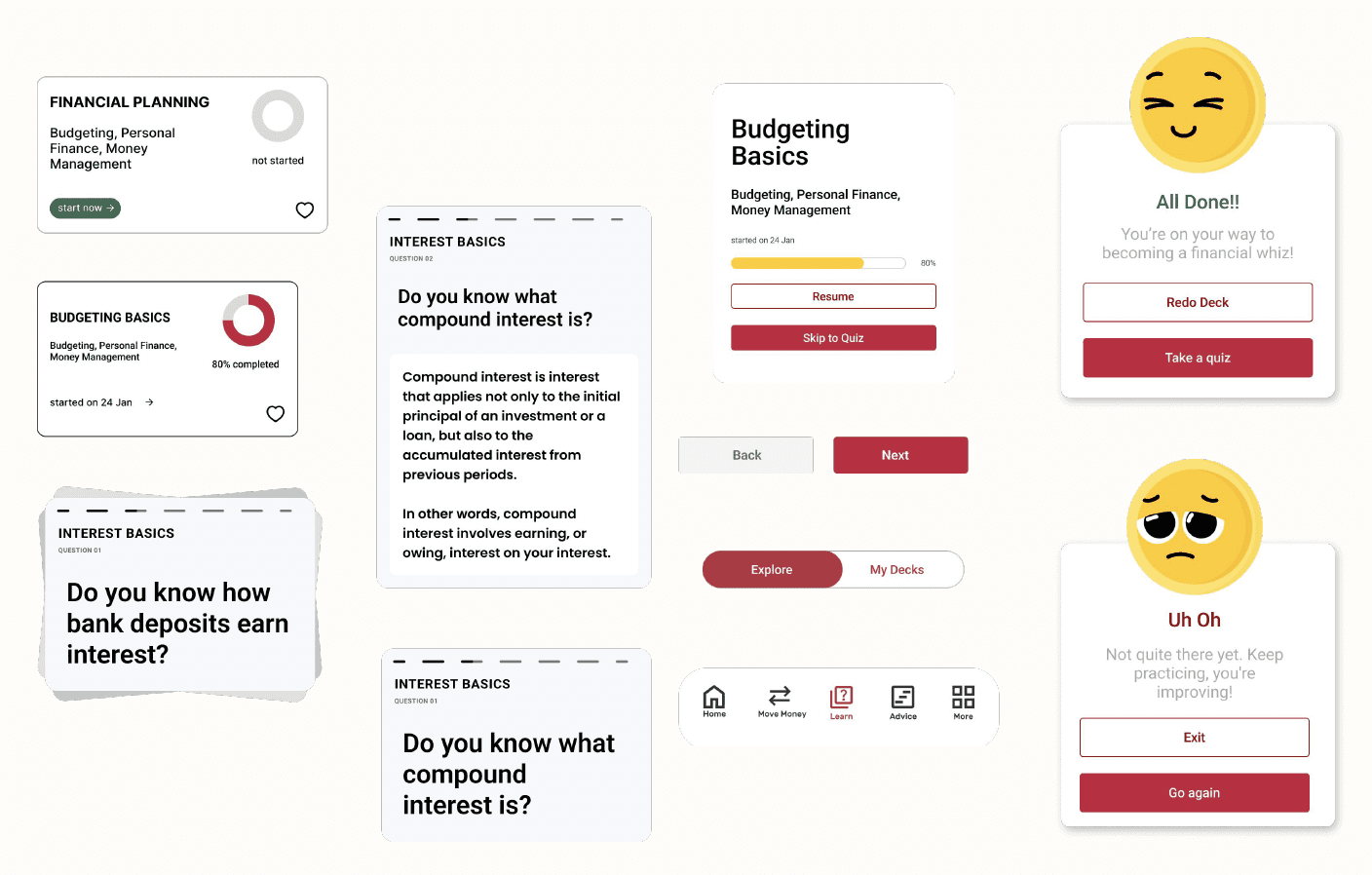
Our UI kit adhered to CIBC’s existing design system but introduced youthful touches (softer gradients, playful icons, and badge-like interactions) to appeal to Gen Z without losing brand credibility.
Future Opportunities
If given more time, we envisioned:
Accessible Learning
Cultural and newcomer banking guidance for international students.
AI Support
Personalized insights that encourage smarter financial habits, not automated decision-making.
Habit Building
Tools like automated savings nudges or fraud-detection mini-games to sustain engagement.
Reflection
Through Zent, I learned that trust in banking isn’t just about security, it’s about clarity, confidence, and connection.
By turning education into an approachable experience, banks can empower users to take control of their finances and, in turn, build loyalty that lasts a lifetime.
UXathon 2025 -
Reimagining digital banking to build Gen Z’s trust
Zent | Mobile App Design
Pain Point
Traditional financial education often feels overwhelming and text-heavy, which discourages Gen Z users from engaging with it.
Solution
Swipeable flashcards deliver information in a fast, familiar, and low-pressure format that aligns with Gen-Z's preference for quick, bite-sized content. Taking inspiration from social media platforms.
Pain Point
Users often don’t realize what they don’t know until they’re in real-life financial situations.
Solution
Short quizzes help users check their understanding and identify knowledge gaps early, encouraging more active learning and confidence building.
My Role
UX/UI Design,
UX Research
Service Provided
Service Design,
Mobile Design
Tools
Figma
Duration
1 Day
Overview
As part of a one-day hackathon hosted by UBC’s UX Hub, our team of four tackled the challenge of rebuilding Gen Z’s trust in digital banking.
We designed Zent, a mobile banking app feature for CIBC that transforms financial education into an engaging, gamified experience, helping young users feel confident, informed, and empowered in managing their money.
I contributed as the UX/UI Designer and Researcher, leading user research synthesis, ideation, and interface design in Figma.
Pain Point
Financial literacy tools often lack personalization, motivation, or follow-up, making it easy for users to disengage or forget what they’ve learned.
Solution
A combination of randomized content, gamified rewards, recap features, and widgets keeps users engaged over time, reinforces learning, and encourages consistent interaction, helping turn financial learning into a sustainable habit.
New Problem Space
How might we reimagine financial education to make banking approachable and transparent, building trust and engagement with Gen Z?
The Solution
Zent is a mobile banking feature that reimagines financial education for Gen Z by making banking engaging and easy to understand.
Research
Understanding What Builds Trust
What does Gen Z value in banking?
Through secondary research and informal interviews with peers, we uncovered key trust factors:
Transparency and clear benefits
Privacy and security
Personalized experiences
Easy navigation and dashboards
Goal tracking and insights
Ideation
Turning Education Into Play
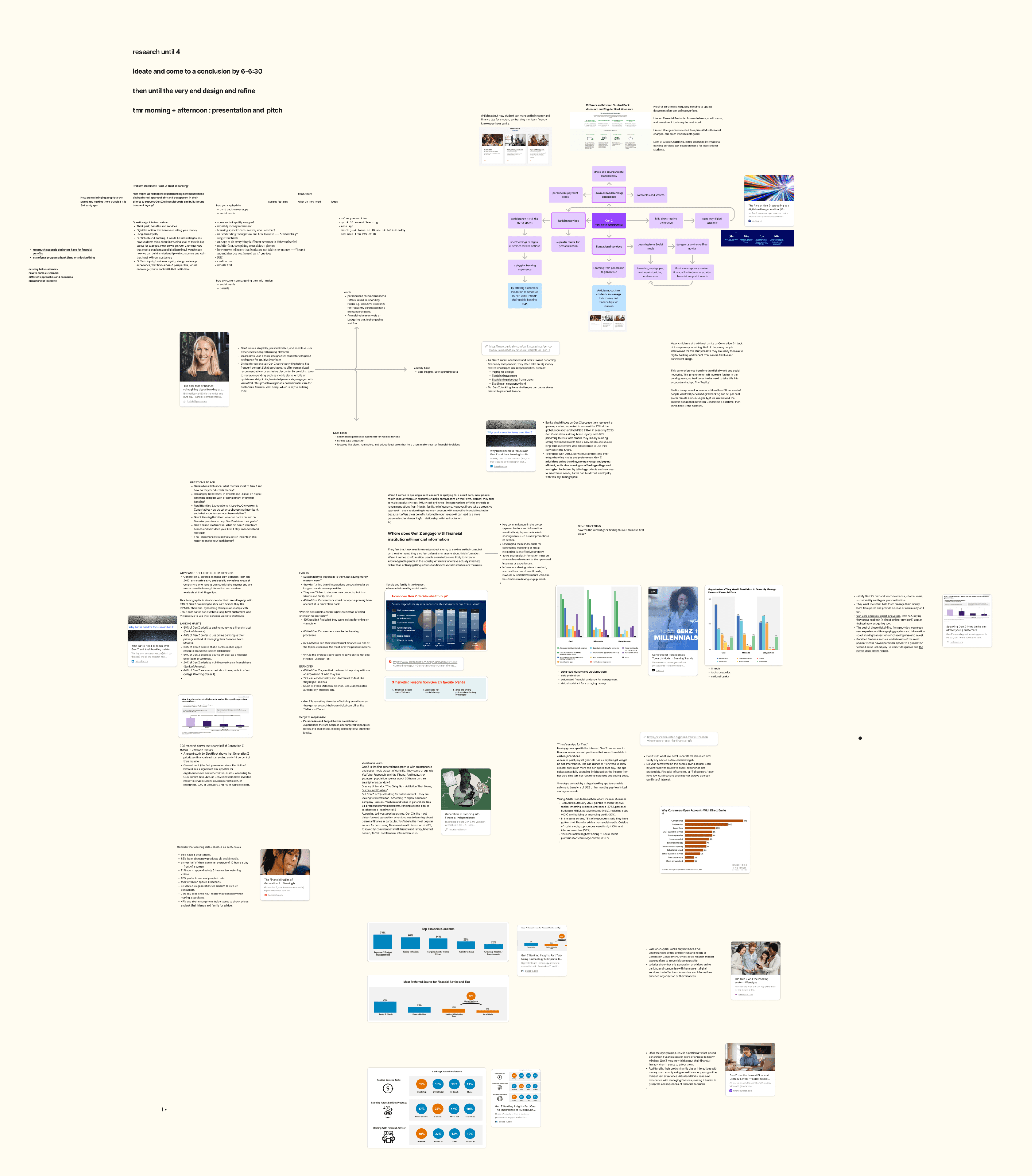
During our brainstorming phase, we explored ways to blend financial literacy with microlearning and gamification, concepts already familiar to Gen Z.
UI Kit
Blending with CIBC’s Visual Language
Our UI kit adhered to CIBC’s existing design system but introduced youthful touches (softer gradients, playful icons, and badge-like interactions) to appeal to Gen Z without losing brand credibility.
Key User Flow
Simplifying the Path to Learning
We mapped a core flow focused on the Learn page, where users explore cards, quiz themselves, and view progress analytics. Each action reinforces understanding and builds confidence.
Reflection
Through Zent, I learned that trust in banking isn’t just about security, it’s about clarity, confidence, and connection.
By turning education into an approachable experience, banks can empower users to take control of their finances and, in turn, build loyalty that lasts a lifetime.
Future Opportunities
If given more time, we envisioned:
Accessible Learning
Cultural and newcomer banking guidance for international students.
AI Support
Personalized insights that encourage smarter financial habits, not automated decision-making.
Habit Building
Tools like automated savings nudges or fraud-detection mini-games to sustain engagement.
Insights
Why focus on education?
01
Empowerment
Educated customers make better decisions and feel in control.
02
Transparency
Teaching users about fees and rates builds confidence and reduces doubts.
03
Relationships
When banks act as learning partners, users feel supported rather than judged.
Our team realized that trust doesn’t just come from secure interfaces, it’s built when users understand their finances. We identified three pillars of financial trust:
The Challenge
How might we reimagine digital banking services to make big banks feel approachable and transparent in their efforts to support Gen Z's financial goals and build lasting trust and loyalty?